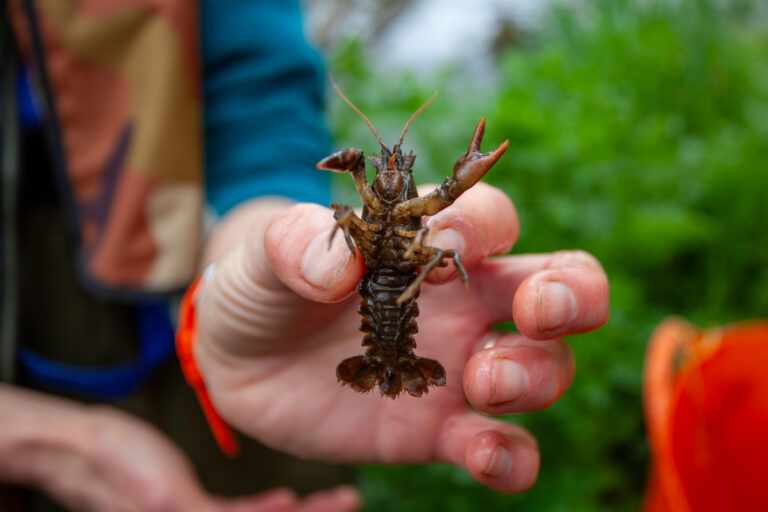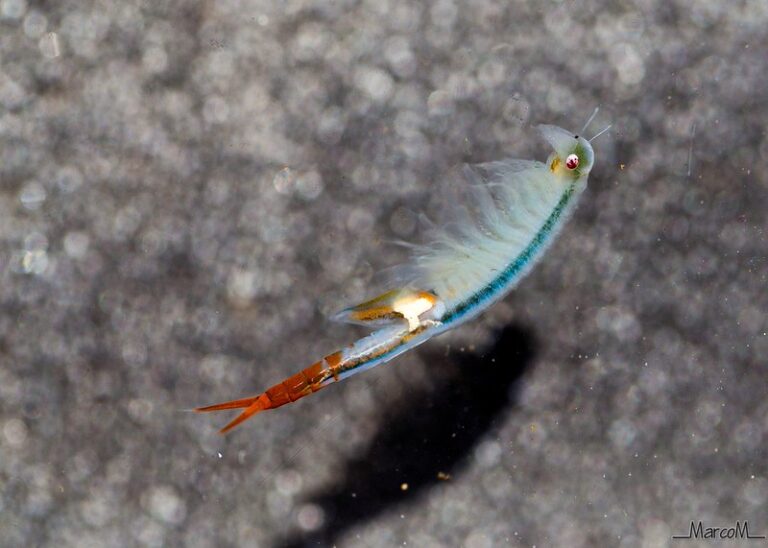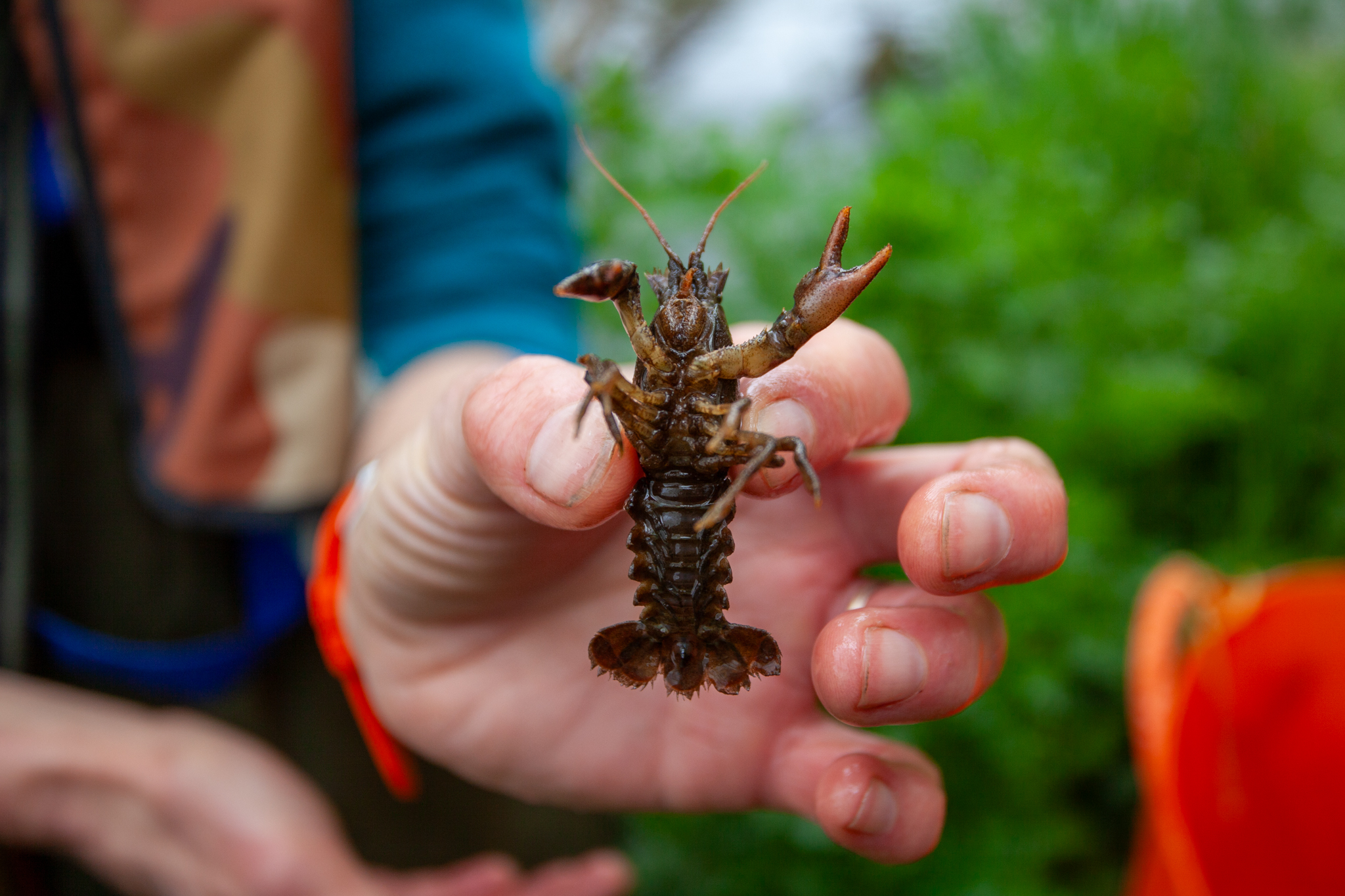

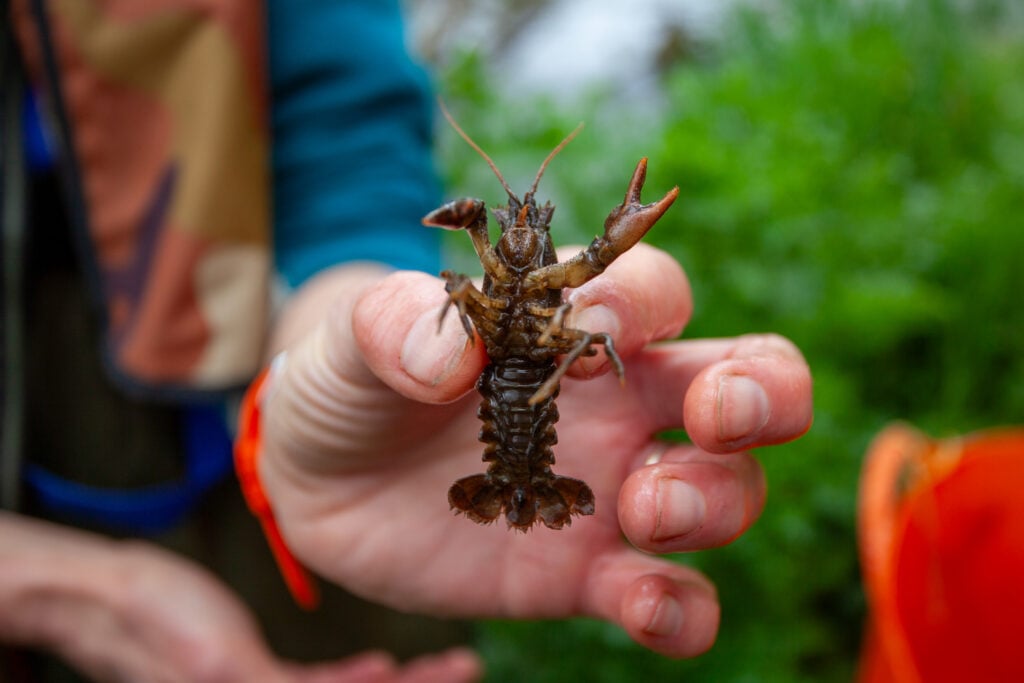
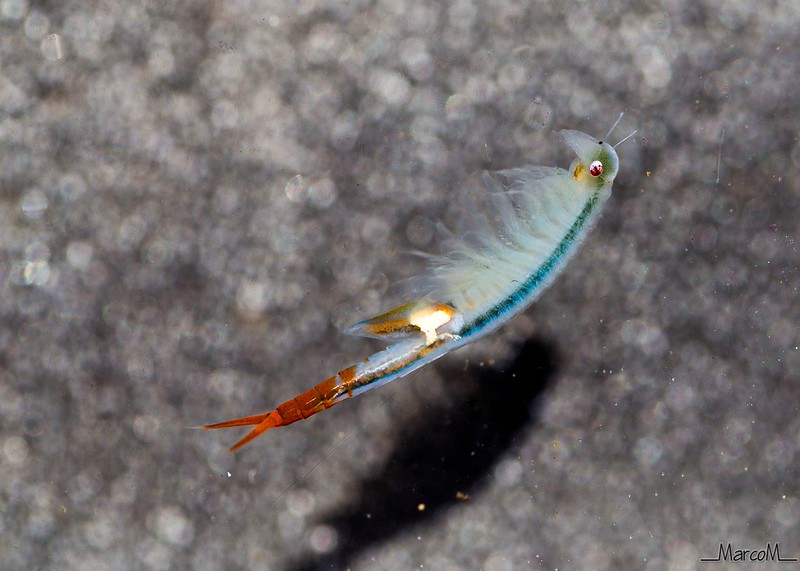
Crustaceans are invertebrates that have a very obvious hard, segmented, external skeleton (known as an exoskeleton) which provides support and protection. This group includes crabs, lobsters, shrimps, crayfish, barnacles and woodlice. They’re mainly aquatic, but some (such as woodlice) live on land.
Their diet ranges from dead organic matter to other invertebrates or small fish. They’re vital to food chains, both as predators and prey, and they play a key role in helping to break down dead organic matter.
Myriapods are also invertebrates. This group includes millipedes and centipedes which have long segmented bodies and one or two pairs of legs on each segment. They live on land and, like woodlice, feed on decaying plant material. Due to some similarities to woodlice they’re grouped with crustaceans.
Five species are listed as Devon Species of Conservation Concern. Of these four are listed as Devon Special SpeciesDevon Species of Conservation Concern that have been 'shortlisted' as needing particular action or attention. as they need extra attention. These are discussed below.
Key pressures and opportunities
Species in this group vary hugely and so pressures and opportunities are discussed for each Devon Special Species and in the relevant habitat pages.